A Day Trip to Bratislava: Exploring Slovakia's Charming Capital
A Day Trip to Bratislava from Vienna Solo. Things to do and how much it cost
5 min read
Bratislava, the capital of Slovakia, sits perfectly positioned along the Danube River, making it an ideal escape from Vienna—just an hour away by train. This proximity makes it a no-brainer for anyone spending time in Austria's capital and looking to tick off another European city without the commitment of an overnight stay.
I decided to make the journey, and despite some minor hiccups along the way, Bratislava proved to be a delightful surprise that punched well above its weight for a day trip destination.
Finding My Way Through the Old Town
Since this was just a day trip, I knew I'd be working with limited time, but Bratislava's compact size meant I could still pack quite a bit in. The city centre is walkable, which is exactly what you want when you're trying to maximize your hours in a new place.
Once I got off the bus, I'll admit I was a bit disoriented at first. Finding my bearings took a moment, but once I spotted Michael's Gate, I knew I was on the right track. Walking through this historic gate felt like stepping back in time, and suddenly I was surrounded by cobblestone streets and colourful baroque buildings that gave the city its character.
I wandered through the narrow streets, eventually making my way to the main square 'Hlavné námestie'. From here, the views opened up, and I could see the Jesuit Church standing prominently.
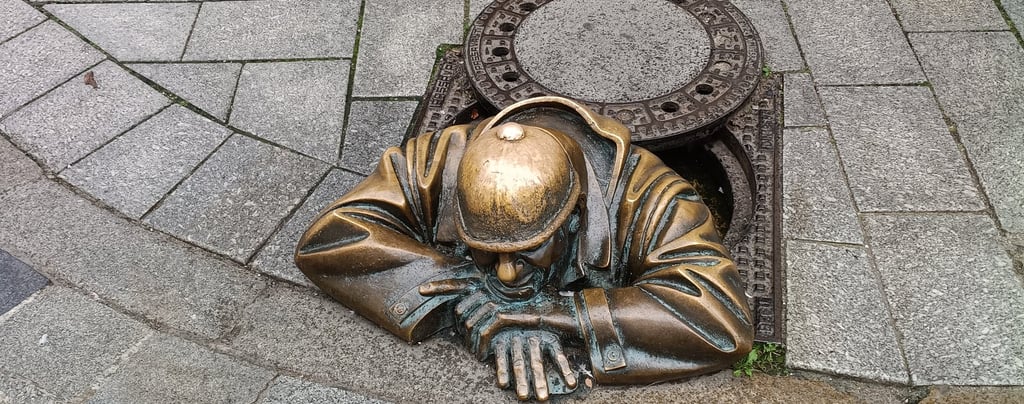
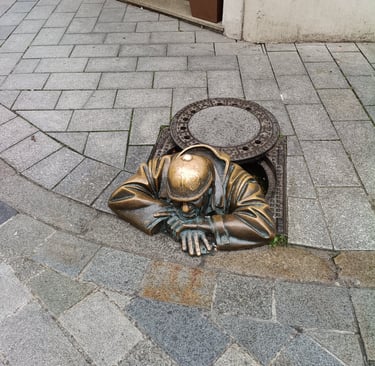
As I explored the streets, I kept my eyes peeled for one of Bratislava's most famous features: the quirky statues scattered throughout the old town. The most iconic is the statue of a workman emerging from a manhole, and yes, I absolutely stopped for a photo. These playful sculptures have become something of a signature for the city.
I also spent some time walking along the old city walls, which offer a different perspective on Bratislava's layout and history.
Climbing to Bratislava Castle
No visit to Bratislava would be complete without making the trek up to the castle, which sits prominently on a hill overlooking the city. I won't lie—there's definitely some climbing involved, and if you're not prepared for a bit of a workout, you might find yourself winded. But trust me, it's worth every step.
Google Maps led me through what I can only describe as a 'back way' to the castle, which initially made me question whether I was going the right direction. But this route ended up being a happy accident because I stumbled upon some absolutely beautiful gardens I might have otherwise missed. The greenery and peaceful atmosphere were a nice contrast to the busier streets below.
From the castle grounds, the views are spectacular. You can see the Danube stretching out below, and across the river, the unusual UFO-shaped structure of a flying saucer on the bridge which catches your eye immediately. The castle itself has a somewhat boxy, reconstructed appearance—it's not the fairy-tale castle you might imagine, but it's historically significant and the elevated position makes it a must-visit. There's also an option to pay to enter the castle interior museums, though I focused my time on exploring the exterior and taking photos of the views.
Hunting for the Blue Church
After descending from the castle, I made my way back toward the city centre, passing through the old town again. My next mission was to find the Blue Church, also known as Church of St. Elizabeth.
This proved to be a bit more challenging than I'd anticipated. The church is somewhat tucked away, and as I followed Google Maps through increasingly residential streets, I started to second-guess whether I was going the right way. It was a cold, rainy day, and with fewer people around in this quieter part of town, I felt a bit lost and uncertain. But I persevered, and eventually, there it was—a stunning art nouveau church painted in the most distinctive shade of blue.
Unfortunately, I arrived on a day when the church was closed to visitors, so I couldn't step inside. But I still got my shot from the outside, and honestly, the exterior is the real star anyway. The pastel blue colour and fairytale-like architecture make it one of those places that looks almost unreal in photos.
Eating and Wandering
By this point, I'd worked up an appetite from all the walking and exploring. I headed back to the old town where there are plenty of restaurants offering affordable local Slovak cuisine.
I grabbed a meal and took my time people-watching from one of the outdoor seating areas.
Getting There and Around
I took the train from Vienna, which is straightforward and convenient. The train drops you at a station outside the city centre (I believe the main station was closed at the time), but from there, you can catch a bus into the old town. Here's where I made my first mistake: I didn't realize that the bus fare was actually included in my train ticket if you buy the correct one—a return ticket to Vienna costs around 18 Euros. Instead, I fumbled with a very awkward ticket machine at the station, trying to figure out how to buy a separate bus ticket. Learn from my mistake and double-check what your train ticket includes.
There's apparently also an option to take a ferry from Vienna to Bratislava, but I couldn't quite figure out where to catch it, and it seemed more expensive anyway. The train was definitely the easier choice.
Once you're in the city centre, you won't need any transport. Everything is within walking distance, which makes exploring feel natural and unrushed.
What It Cost Me
This day trip was remarkably affordable. My train ticket cost equivalent of about £16, and I spent roughly another £10 on a meal, a snack, and a small souvenir. All in, I was out about £26 for the entire day, which feels incredible value for experiencing a European capital.
Money and Practicalities
Slovakia uses the Euro, which made everything simple coming from Vienna—no currency exchange needed. I paid by card almost everywhere, which was convenient, though I did end up paying cash for my souvenir at a small shop. Even there, card payment was still an option, so you definitely don't need to carry much cash if you prefer not to.
Staying Safe
I never once felt concerned about my safety in Bratislava, especially since I was there during daylight hours. The only moment I felt slightly uneasy was when I was searching for that Blue Church. As I mentioned, I found myself in a quieter, more residential area on a cold, rainy day with few people around. It wasn't that anything seemed dangerous—I just felt a bit out of my element and questioned whether I was in the right place. But that feeling passed quickly once I found the church.
What I'd Do Differently
My biggest mistake was not bringing an umbrella. The weather turned rainy, and I ended up getting fairly wet as I walked around.
And as I mentioned earlier, make absolutely sure you buy the correct train ticket from Vienna that includes the bus transfer. It'll save you time, money, and the frustration of dealing with confusing ticket machines when you just want to start exploring.
Final Thoughts
Bratislava exceeded my expectations for a day trip. It's compact, affordable, full of character, and offers a nice mix of history, architecture, and those quirky touches that make it memorable. If you're in Vienna and have a spare day, or if you're planning a Central Eastern Europe trip and want to add another destination without much hassle, Bratislava is worth it.
Watch out for more travel destinations and tips to make planning and research easier.