Budapest on a Budget: Two Days, Less Than £200
5 min read
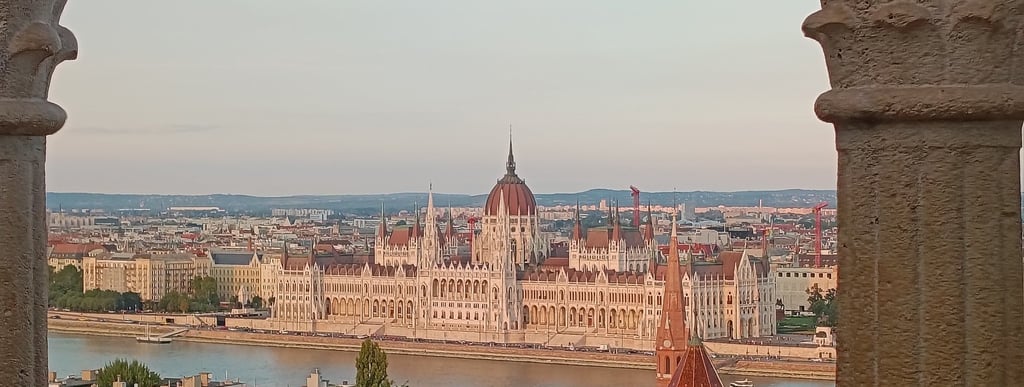
Budapest is the enchanting capital of Hungary that's actually made up of two distinct places—Buda and Pest—split by the Danube River. This city is quirky, cool, and refreshingly affordable. I managed to cover all the main highlights plus stumble upon an unexpected market festival, all for less than £200 over two days. Not bad at all.
I arrived by train from Vienna, which turned out to be a comfortable two-and-a-half-hour journey. This time I booked directly through the train operator RegioJet instead of using the booking platform Trainline, and I'm glad I did—I got a cheaper ticket with more flexibility to upgrade my seat. Little wins like this make budget travel even sweeter.
Day One: Parliament, Memorials, and Castle Views
After dropping off my luggage, I made my way straight to the Hungarian Parliament Building. The building is absolutely massive and magnificent, and you can definitely see the architectural similarities with Vienna.
Since the Parliament sits right by the river, I wandered down to the waterfront and took some photos of the scenery. While you're there, make sure you stop by the Shoes on the Danube Bank memorial. It's a sobering Holocaust memorial that shouldn't be missed.
From there, I walked all the way to the Széchenyi Chain Bridge and crossed over to the Buda side, heading toward the castle. Once you reach the foot of the castle, you've got options. You can take the stairs up if you're feeling energetic, or opt for the funicular if you'd rather save your legs. The funicular costs 5,000 HUF for adults (roughly £11), which isn't exactly cheap for what amounts to a very short ride. Alternatively, you can take the bus from the foot of the hill, which is included in the travel card—that's what I'd recommend.
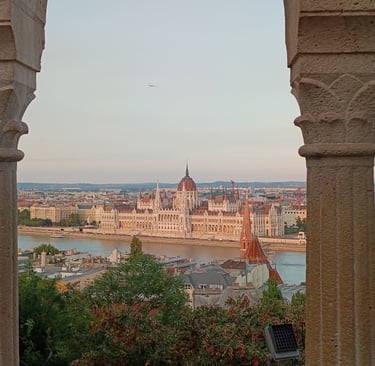
The bus stops near the base of some steps leading up to Fisherman's Bastion, which offers stunning views overlooking the river and the Pest side of the city. Right next to it is Matthias Church, which is worth a look.
The castle itself is about a ten-minute walk from Fisherman's Bastion—just follow the signs. As you walk there, you'll find a lovely park area with a range of shops and restaurants. Do note that the castle sometimes hosts paid events, so it's worth checking ahead to see if you'll actually be able to enter on the day you plan to visit.
After exploring the castle grounds, you can either take the funicular, the steps or a bus back down. To cap off the evening, I headed to one of Budapest's famous ruin bars. I'll be honest—I mostly went for the photo opportunity and didn't hang around for long, but it was still fun to see what all the fuss is about.
Day Two: Markets, History, and a Lucky Find
I started the day at the Great Market Hall. I'd been warned it was mostly souvenirs and food stalls, and that turned out to be pretty accurate. I didn't buy much, but it was still nice to soak in the atmosphere and experience a bit of local life.
Afterwards, I made my way to the House of Terror Museum, which documents Hungary's dark history under both Nazi and Communist rule. Entry costs about 6,000 HUF (around £13), though prices vary depending on your nationality. I'd strongly recommend getting the audio guide as well—there's a lot going on in this museum, and it can get genuinely confusing without some context. They also provide helpful printouts as you move through the exhibition, which I found really useful.
From the museum, it's just a short tram ride to Heroes' Square, another famous landmark that's definitely worth the photo opportunity. I got lucky here—I wandered just past the square into City Park and stumbled across a market festival with live music. These kinds of unexpected discoveries are what make solo travel so rewarding.
If you've got time on your way back, try to pass by the Parliament Building at night. It's lit up beautifully and looks even more spectacular than during the day.
I headed back to my accommodation near Rákóczi tér that evening, and not far from there, I found what might have been the best burger of my entire trip. More on that later.
Day Three: A Morning at Margaret Island
My third day was only a half-day since I was leaving in the afternoon, but I had just enough time to visit Margaret Island. It's a peaceful city park where you can stroll around at your leisure, see the musical fountain, and stop by the mini-zoo if that's your thing. If you have more time than I did, the Széchenyi Baths are also on the island. Don't forget to snap a photo in front of the big 'Budapest' sign—it's pretty much obligatory if you are there.
Getting Around
Budapest has one of the best and most straightforward metro systems I've come across. The tram and bus network is also incredibly convenient and will get you anywhere you need to go. Tickets can be easily purchased from machines and range from singles to 24-hour and 72-hour passes. Google Maps works brilliantly here as a navigation tool, which made getting around stress-free.
Where to Stay
I stayed in a cute Airbnb-style apartment that I actually booked through Booking.com, located in the Rákóczi tér area. It was fairly central—the metro was literally at my doorstep (green line), and I had tram options not too far away either. The apartment wasn't just cute; it was genuinely functional. It had a very handy washing machine and a little kitchenette stocked with some basic supplies, which helped me save some pennies and added a lot of convenience.
Costs
Budapest was remarkably affordable. Here's the breakdown of what I spent:
Train (one-way): £23.27
Accommodation (2 nights): £102.68
Getting around (3 days): £12.23
Food (3 days): £35.33
Activities (Museum): £13.34
Miscellaneous: £5.19
Total: £192.04
This doesn't include my onward journey to the next city, and I spent most of my time sightseeing, so it was pretty cheap overall. The best money I spent was on a burger and chips meal from Petrol Beer & Barbeque (https://maps.app.goo.gl/hsLuR9PjaW8nZeAn6), which I found on Google Maps. Seriously, it was incredible.
Cash & Data
The currency is Hungarian Forint (HUF). I used my card everywhere and never once felt the need for cash. My purchases were mainly at museums, transport ticket machines, supermarkets, and restaurants, and card was accepted at all of them.
Safety
I felt completely safe throughout my stay, especially since I stuck mainly to busy tourist areas. Even at night, these areas were well-lit and bustling. That said, I did get a bit confused one night trying to find the connecting tram back to my accommodation—it was elevated and I had to climb a bridge, which wasn't entirely clear on Google Maps. My usual advice applies: plan ahead and try to stay close to your base at night, especially if you're navigating public transport in an unfamiliar city.
Mistakes I Made
A few things I'd do differently next time: I didn't check ahead about events at Budapest Castle, which meant I couldn't actually enter on the day I visited. I also didn't get a chance to try the famous thermal baths, but that just gives me a reason to come back. And a word of warning—no photos are allowed at the House of Terror Museum. I found that out the hard way when a guard told me off.
Final Thoughts
Budapest is brilliant—affordable, beautiful, and packed with history. Whether you're into architecture, sobering historical sites, quirky ruin bars, or just wandering around gorgeous parks, there's something here for everyone.
For more itineraries around Eastern Europe and helpful resources to plan your trip, check out the website.