Vienna Solo - How much & things to do
Solo trip to Vienna, comfortably on a budget
7 min read
A First-Timer's Guide to Vienna: Comfort on a Budget
If you're planning your first solo trip to Vienna and want to know what to expect without breaking the bank, you're in the right place. I managed to explore Austria's grand capital for three nights while keeping costs reasonable, and I'm here to share everything I learned along the way.
One thing that struck me immediately about Vienna is how self-contained it is. Most of the main attractions sit within a circular route called the Ringstrasse, and you can reach nearly everything by tram. The Vienna State Opera, Parliament Building, City Hall (known locally as the Rathaus), and Hofburg Palace are all accessible from this route, which makes planning your days surprisingly straightforward.
Vienna is fundamentally about scale. Everything feels bigger than in other neighbouring cities, from the buildings to the statues scattered throughout. When you're standing in front of these massive structures, you understand why the Habsburgs ruled an empire from here. There's an undeniable grandeur to the place that other capitals don't quite match.
I travelled to Vienna by train from Prague, which took about four hours. The Austrians speak German, but you can get by with English in most places, which made navigating the city much easier than I'd anticipated.
Day One: The Ringstrasse Circuit
Get out and explore right away. Hop onto the tram that takes you around the Ringstrasse and jump off whenever something catches your eye. Walk around the majestic buildings, many of which are now museums. Entrance fees apply if you want to go inside, but you can gain plenty just from exploring the exteriors and taking photos.
I recommend getting off to explore the Hofburg Palace, which is actually a series of buildings rather than a single structure. Some of these buildings now house museums, so if you're interested in diving deeper into Habsburg history, this is where you'd do it. Even if you don't go inside, the complex itself is worth wandering through.
From Hofburg, you can walk across to see the ancient Roman ruins. Close to this area is the Spanish Riding School, where you can walk by and see the famous Lipizzaner horses in their stables through the windows. If you're interested, you can even book tickets to watch them perform dressage, though I opted to just peek through the windows on my way past. Watch out for the Vienna State Opera which is not far from here.
In the afternoon, take a tram to the Naschmarkt and see all the food stalls available. Stop, rest, and have a local meal of schnitzel. I had mine with chips, and the French couple next to me were decidedly not amused by my choice of accompaniment, and honestly, it was not amazing but it ticked a box of things to do.
As evening falls, take the tram or metro to Stephansplatz to see St Stephen's Cathedral at night. It's a popular square with lots of people gathered around, and it leads to various shops if you fancy a bit of window shopping before heading back.
Day Two: A Day Trip to Bratislava
Do something slightly different and take a day trip to another country. Bratislava, Slovakia is only an hour away by regional train, which felt almost too easy. The tip here is to get a return ticket from the train station, and it even covers the local buses for that day in Bratislava. You can also get there by ferry, but this is more expensive, and it felt more convenient to go by train.
Explore the old town of Bratislava and make sure you go up to the castle. Be prepared for steps, lots of them, but the views of the city and the Danube are absolutely worth the climb. The perspective from up there gives you a real sense of Bratislava's position on the river and how the old town spreads out below.
Before you head off to Slovakia, though, you might want to squeeze in a visit to the Belvedere complex, which hosts two palaces: the Upper and Lower Belvedere. The Upper Belvedere houses the famous painting "The Kiss" by Gustav Klimt. You have to buy tickets to enter the museums, but walking around the gardens is free and well worth your time. I wish I'd given myself more time here, as I didn't realize there were two separate palaces to explore.
Day Three: Museums and Palaces
Take in some history and visit the Wien Museum Karlsplatz, which covers Vienna's story from Roman times to the present day. Best of all, it's free, which makes a refreshing change from all the other attractions in Vienna. Even if you're not typically a museum person, you'll get a lot from this. The exhibits cover when Vienna was the center of the Austro-Hungarian Empire, the conflicts with the Ottoman Empire, and the injustices of the Holocaust and Austria's role in it. If you get sucked in like I did, this can take about two to three hours.
I made my way back to Stephansplatz so I could see the area by day and properly admire St Stephen's Cathedral in daylight. There's something about seeing these buildings in different light that makes them feel entirely new.
I then went to Schönbrunn Palace, which sits slightly outside the Ringstrasse area in Vienna's 13th district. As with everything else in Vienna, this place is huge. The gardens are massive and free to explore, and there's also a maze, a zoo, and other activities scattered throughout the grounds. If you want to fully explore everything, you might need a whole day.
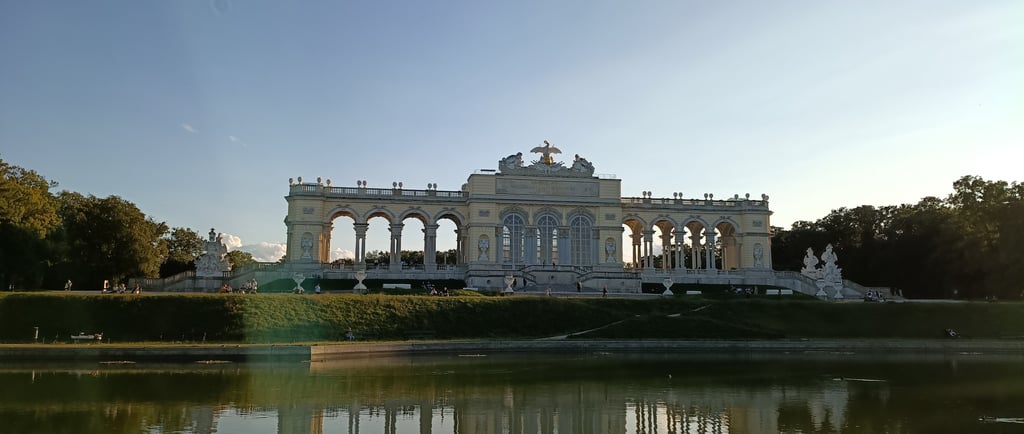
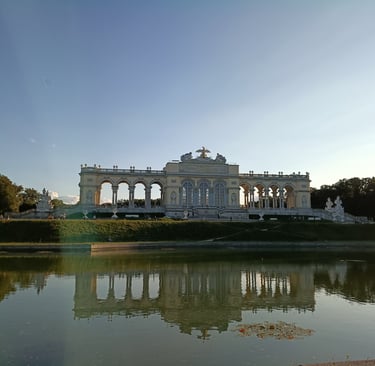
I just walked along the gardens, watched the runners doing their laps, and admired the landscape. I then made my way up to the Gloriette monument on the hill, which involves a bit of a climb but rewards you with a panoramic view of the palace and its grounds. I stopped and had a well-deserved rest on a bench while others relaxed comfortably on the grass or enjoyed picnics. If you prefer, there's also a café within the Gloriette itself.
I made my way home by bus and tram and made sure I stopped by a food stall to try the famous Käsekrainer, which is essentially a sausage served with a slice of bread and mustard. Simple, but satisfying after a day of walking.
Getting Around
Getting around Vienna is super easy. The trams, buses, and metro are very efficient, and quite a few attractions are clustered in the city centre around the Ringstrasse. I bought a three-day pass which matched my stay and was the best value for the journeys I'd be taking. This cost just €17.10, about £15, but this option has since been scrapped in 2026. Now only 24-hour or seven-day passes are available, costing about €10 and €29 respectively.
Where to Stay
Vienna is divided into districts, and I stayed in the 4th municipal district, which is a small area located immediately south of Vienna's city centre. There was a tram right at my doorstep, which made getting around incredibly convenient. Because it was slightly outside the centre, accommodation was cheaper, and since the transport system is so efficient, I didn't see being slightly removed from the centre as a problem at all.
What It Cost Me
In general, Vienna is more expensive than other neighbouring capitals, and you need to pay to get into most historical buildings. However, you can still get a lot from the experience by walking around the city and exploring the grounds without paying entrance fees.
Here's what my three-night stay cost me:
Train from Prague (one-way): £18.95
Accommodation (3 nights): £179.08
Getting around (3 days): £14.86
Food (3 days): £38.86
Activities: £0
Miscellaneous: £3.90
Total: £255.65
I didn't do any major paid activities in Vienna such as the opera or paid museums, so you'd have to budget extra if those interest you. Walking around to see historical sites is free, as is the one museum I did visit, the Wien Museum Karlsplatz. My food consisted mostly of snacks from the supermarket and one proper meal of schnitzel, which kept costs down considerably. This does not include costs for the day trip to Bratislava, which cost £26 all in, mostly the train ticket of £16. I will give a separate breakdown on this later.
Cash and Data
The Austrians use the Euro, which makes it easy to compare with the pound. You'd expect Vienna to be completely cashless, but a lot of reviews warn that some places still expect cash, so I carried some with me just in case. I didn't really have much need for it, though.
Safety
I felt very safe in Vienna. Even walking around at night felt comfortable, especially in the tourist areas, though obviously, you should still be cautious and aware of your surroundings.
Mistakes and Tips
I made a few mistakes that you can learn from. At the Belvedere complex, I didn't realise there were two palaces and ended up missing out on viewing the other one properly. Give yourself more time here than you think you'll need.
Museums and entrances to buildings are expensive, so prioritise what you genuinely want to see. You can gain a lot just from walking around exteriors and public spaces without paying entrance fees.
Watch out for the cycling paths. They're everywhere and heavily used, and it's not always clear whether you're trespassing onto one. You might suddenly find yourself colliding with a rider. Similarly, some of the trams run at street level, and you might walk onto the lines thinking it's part of the sidewalk.
The train ticket to Bratislava covers the bus ticket there as well. Make sure you buy it physically from machines at the central train station, as I didn't see this same offer online. It's also cheaper, as the comparable return ticket online can be double the price.
Book accommodation with a small kitchenette and/or fridge to save on food costs. You can buy from supermarkets and store things in the fridge, or simply have a cup of tea or coffee with pastries for breakfast without spending extra.
Watch out for more information on the day trip to Bratislava, with details on what to do when you get there.